Industrial Pot Magnet Manufacturer & Custom Magnetic Assemblies Supplier
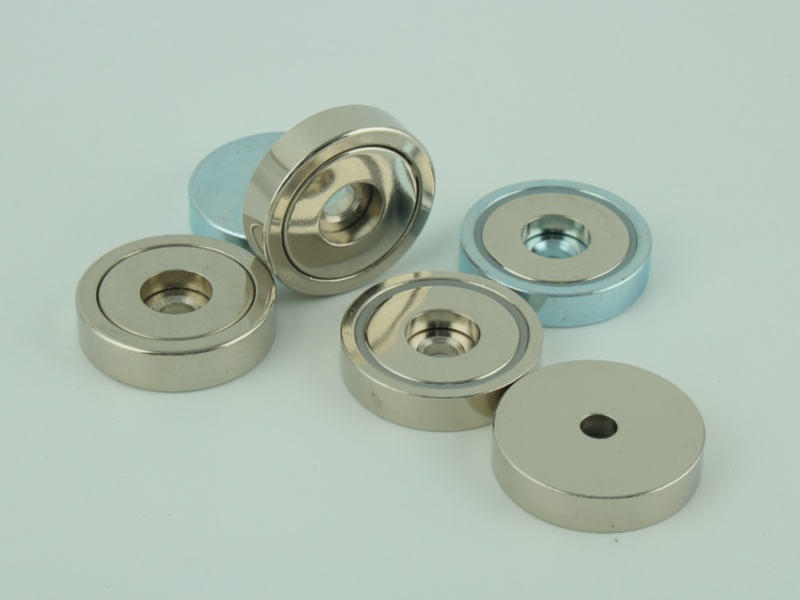
Pot magnets, also known as cup magnets or magnetic assemblies, are highly efficient holding systems designed for maximum clamping force on direct contact surfaces. By enclosing a permanent magnetic core—such as Neodymium (NdFeB) or Ferrite—within a ferromagnetic steel housing, these assemblies optimize the magnetic circuit to significantly concentrate flux density. As a specialized B2B manufacturer equipped with advanced CNC machining and stamping facilities, we supply high-volume, precision-engineered pot magnets to global industrial sectors. From heavy machinery and automated fixtures to commercial signage and retail display systems, our custom magnetic solutions provide secure holding power and robust mechanical protection for diverse engineering requirements.
How Do Pot Magnets Work?
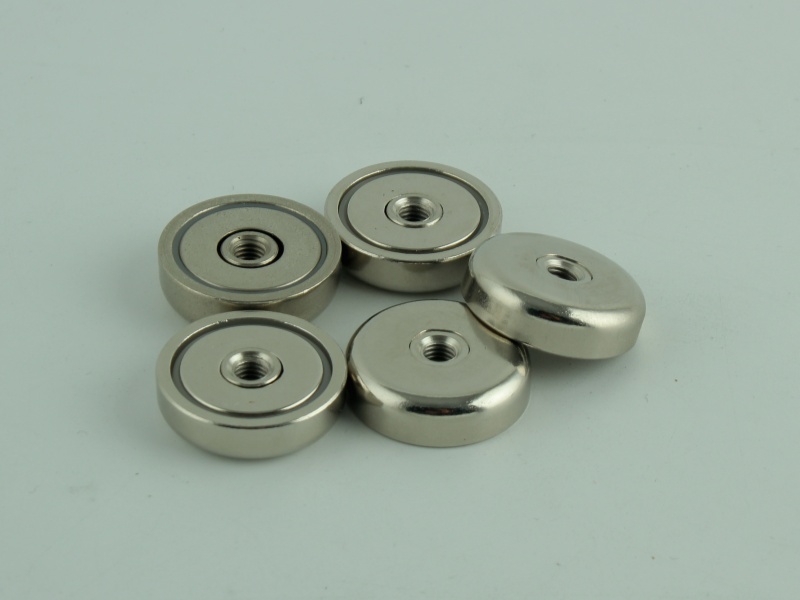
The fundamental structure of a pot magnet includes three main components: a permanent magnet, a ferromagnetic steel casing, and a non-magnetic spacer material (such as epoxy, plastic, or brass) utilized to isolate the polarities. The outer steel casing does far more than simply act as a protective armor shielding the inner core from cracking or shattering upon sudden contact with hard steel workpieces; it serves a critical operational role in modifying the behavior of the magnetic circuit.
Because the steel cup possesses a much higher magnetic permeability than the surrounding air, it acts as a low-resistance pathway that channels, bends, and concentrates the magnetic flux lines toward the open, active working surface while simultaneously minimizing rear and lateral magnetic leakage. As a direct result, the magnetic flux follows a far more efficient and condensed path than it ever could in a standard bare permanent magnet. When the pot magnet is securely attached to a ferromagnetic workpiece, a highly optimized, closed magnetic circuit is formed. This allows the assembly to generate up to triple the breakthrough holding force of an ordinary individual magnet of comparable dimensions, maximizing efficiency on direct contact areas.
Types of Pot Magnets We Supply
Pot magnets can be categorized through various structural designs, mechanical accessory configurations, or the specific magnetic materials enclosed within the metal casing. For practical engineering and commercial procurement, classifying these assemblies by their manufacturing processing style and geometry provides a clear, straightforward starting point. This is because the fabrication method directly dictates the dimensional precision, structural load limits, profile adaptation, and overall volume cost efficiency of the pot magnet assembly. At Ketai Magnets, we specialize in three core structural categories tailored to distinct commercial requirements:
1. Channel Magnets
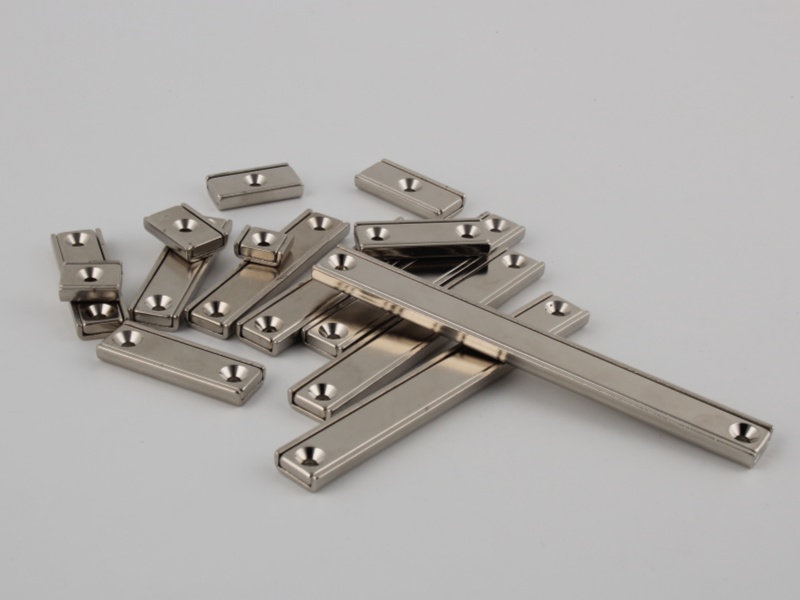
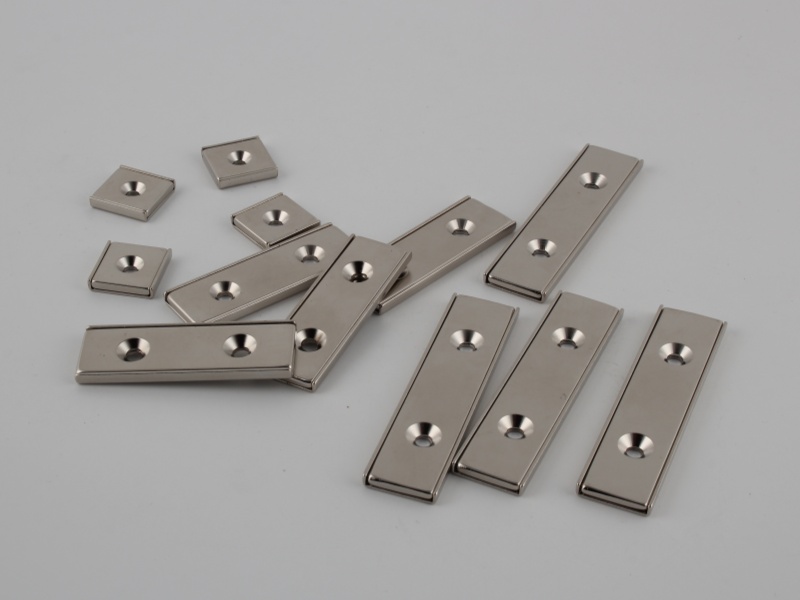
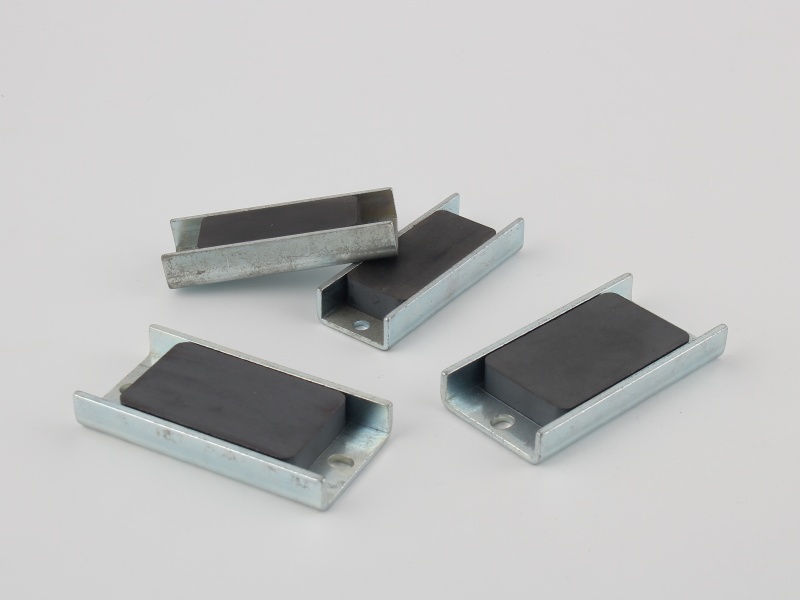
Formed with a heavy-duty rectangular steel channel casing, Ketai’s Channel Magnets distribute strong magnetic force linearly rather than in a centralized circle. The steel channel profile completely encases and protects the internal rectangular Neodymium or Ferrite blocks from severe operational chipping. This unique linear geometry makes them the ultimate choice for secure mounting along narrow tracks, commercial signage profiles, industrial warehouse racks, and automated sliding fixtures requiring uniform alignment.
2. Stamped Pot Magnets
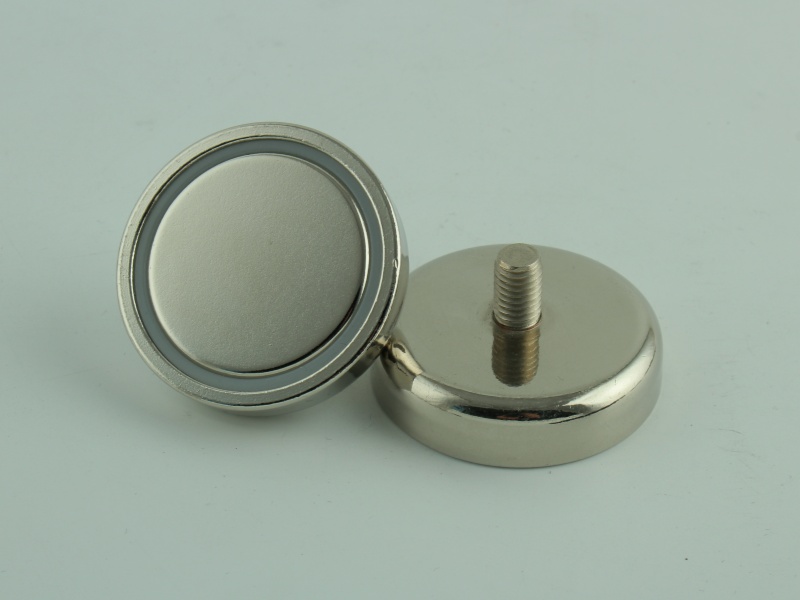
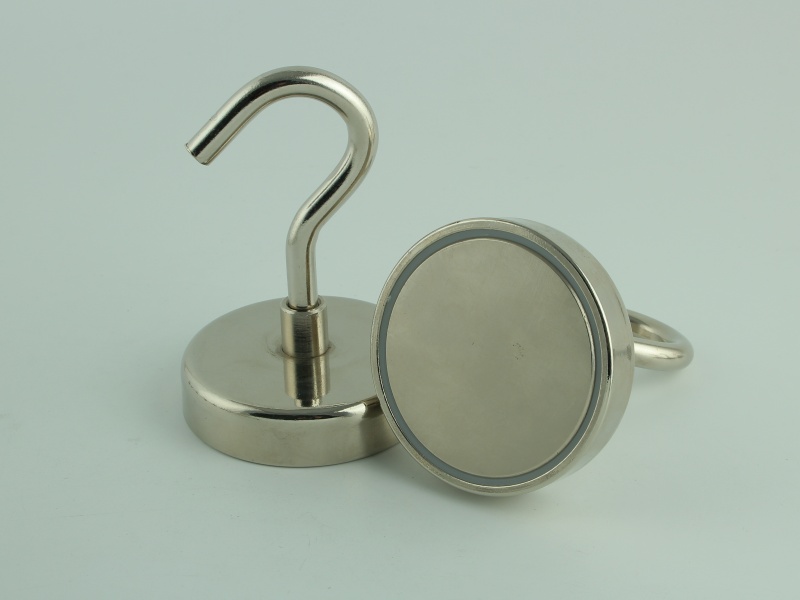
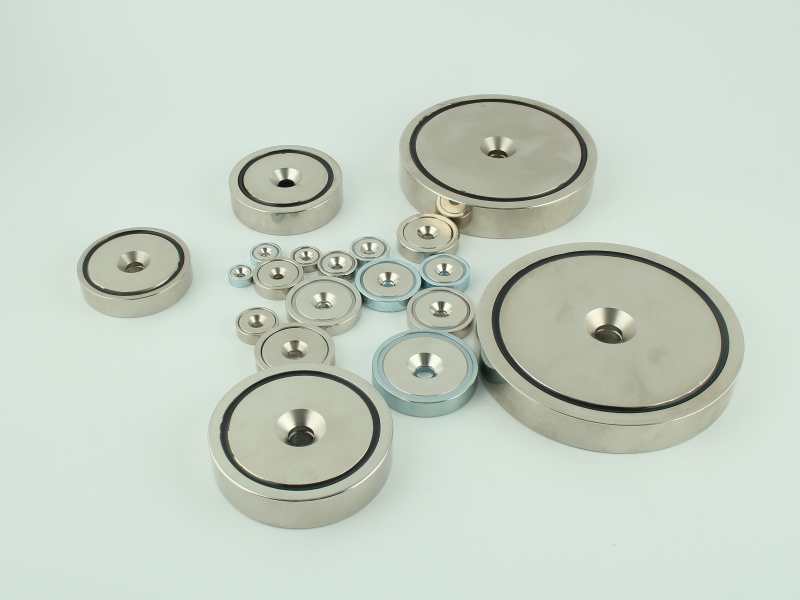
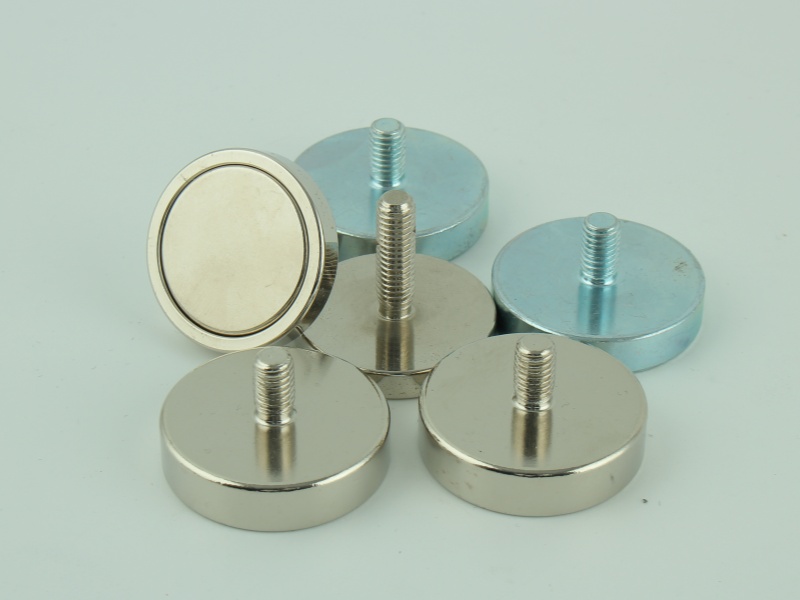
Manufactured utilizing high-precision automatic stamping presses, our stamped pot magnets feature an economical steel cup that perfectly encases the magnetic core. This automated cold-stamping production category yields massive throughput speeds, making it the most cost-effective and budget-friendly solution for large-scale industrial distribution and wholesale procurement. They do not sacrifice raw clamping performance and are highly popular in standard countersunk, threaded external stud, and integrated hook variations for rapid, everyday hanging arrangements.
3. CNC Pot Magnets
Machined directly on advanced CNC precision lathes, Ketai's CNC Pot Magnets feature thicker metal walls, ultra-tight dimensional tolerances, and refined surface finishing. These heavy-duty machined cup assemblies are custom-designed from scratch for critical industrial machinery, medical equipment, and harsh manufacturing environments. They provide unmatched resistance to mechanical shock, ensure pristine airtight sealing configurations, and can accept specialized multi-layer anti-corrosion coatings (such as thick NiCuNi, Zinc, or chemical-resistant Epoxy) where exact positioning is mandatory.
Comparison of Pot Magnet Assembly Formats
The table below outlines the distinct performance attributes, manufacturing characteristics, and optimal deployment areas across our primary pot magnet configurations to assist you in refining your engineering selection:
|
Pot Magnet Type |
Holding Force Distribution |
Dimensional Precision |
Cost/Volume Efficiency |
Primary Application |
|
Channel Magnets |
High / Linear Grip |
Standard |
Excellent for Profiles |
Tracks, Warehouse Racks & Signage Mounts |
|
Stamped Pot Magnets |
High / Concentrated |
Standard (Stamping Tolerances) |
Outstanding (Most Economical) |
High-Volume Hanging Fixtures & Retail Displays |
|
CNC Pot Magnets |
Maximum / Heavy-Duty |
Ultra-Precise (Tight Tolerances) |
Premium Custom Tailored |
Heavy Industrial Machinery & Aerospace Fixtures |
Pull Force of Pot Magnets
Pot magnets are universally rated by their maximum pull force capability, which is also commonly referred to in technical data sheets as holding force, adhesive force, clamping power, or breakaway force. This standardized rating value represents the maximum perpendicular force required to completely detach the cup assembly away from a thick, perfectly flat, clean, low-carbon mild steel test plate under ideal laboratory conditions. In real-world commercial scenarios, however, the actual holding performance depends heavily on the specific working conditions in which the assembly is deployed.
The single most critical variable dictating performance is the air gap. Any non-magnetic barrier positioned between the working metal face of the pot magnet and the target ferromagnetic workpiece—including layers of industrial paint, powder coatings, plastic films, dust, grease, rust, or surface scale—can disrupt the closing of the magnetic circuit loop, drastically weakening the total pull force. Furthermore, the overall thickness, structural flatness, and raw chemical permeability of the mating metal contact surface are equally decisive. If the target steel sheet is too thin, it becomes magnetically saturated, meaning the pot assembly cannot achieve its rated laboratory pull force in actual operations.
Operating temperature stands as another fundamental factor. As your working environment's ambient or contact temperature spikes, the magnetic output of the inner core will naturally degrade based on its material thermal properties (such as the lower Curie temperature limits of standard Neodymium vs. the high-temperature stability of Ferrite or SmCo alloys). Because of these operational dynamics, catalog pull forces must always be interpreted as baseline reference values rather than a universal safe working load limit. For any critical engineering application—especially where human safety or structural overhead fastening is involved—a proper mechanical safety margin should always be thoroughly calculated into your system design.
Choosing the Right Pot Magnets for Your Application
Selecting the ultimate pot magnet solution requires a comprehensive balancing of diverse operating criteria rather than simply picking the highest pull force value from a grid. In everyday field operations, engineers must evaluate the mounting orientation, raw contact surface conditions, shear load direction (sliding forces), maximum continuous operating temperatures, and project-specific safety protocols simultaneously.
While catalog standard shapes easily fulfill traditional commercial fixing or retail displaying needs, custom industrial workflows frequently demand precision adjustments. This includes modifications to shell diameter, inner magnet grades, precise metric/imperial internal thread pitches, countersunk angles, or custom hook lengths. To guarantee a reliable, risk-free selection process, it is highly recommended to evaluate the actual physical working variables alongside detailed engineering drawings rather than depending solely on generalized online specification sheets.
If you are in the process of selecting high-performance pot magnets or managing custom magnetic assemblies for a demanding commercial program, feel free to send your operational parameters or technical drawings to Ketai Magnets for a professional review. Based on your specific mounting geometry, target contact material thickness, and thermal constraints, our engineering department will analyze your data to deliver an optimized, scalable, and highly competitive pot magnet solution.